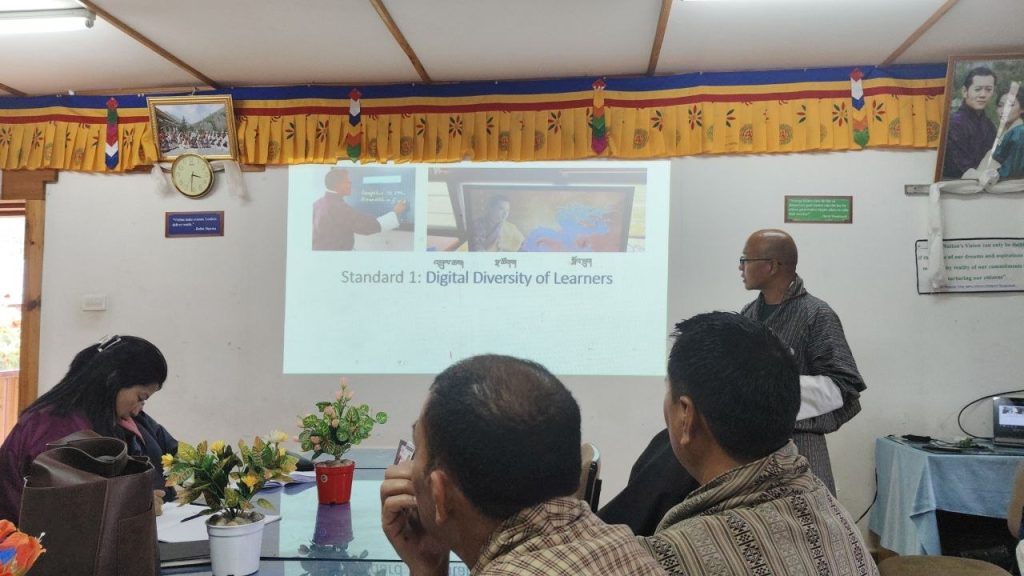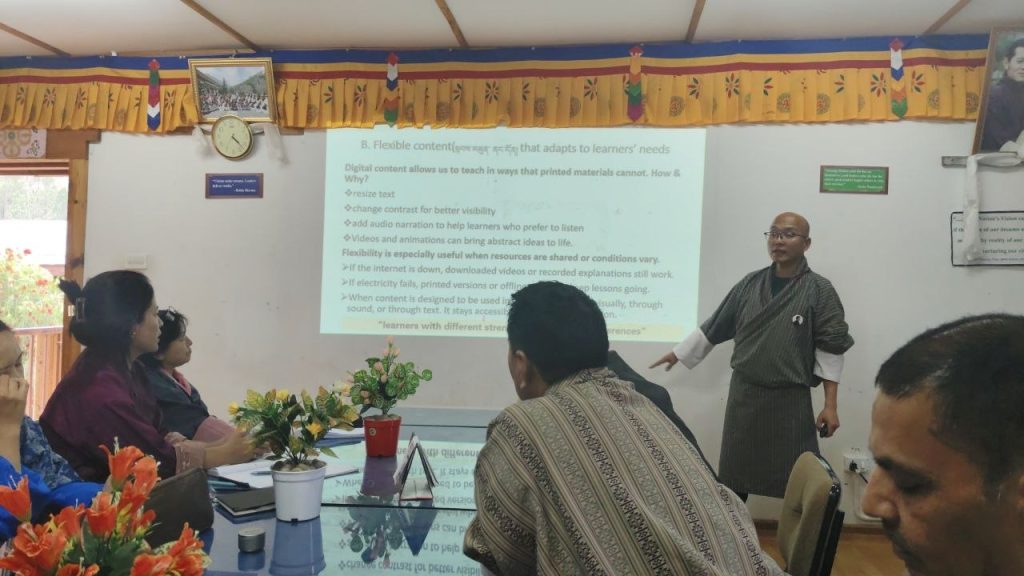


On 26th May 2026, a School-Based In-service Programme was conducted at Khasadrapchu Middle Secondary School by Sangay Tenzin, the EdTech Focal, for all the teaching staff. The session focused on Focus Area 1.1: Digital Accessibility and Inclusion under Unit 1.1.1 Beginner Level of the Digital Lopen programme. The programme aimed to advocate and familiarize teachers with the importance of creating inclusive and accessible digital learning environments for all learners.
The session began with an introduction to the Digital Lopen framework and its overall structure. Teachers were oriented on the different standards, focus areas, and proficiency levels under the programme. Special emphasis was given to the beginner level, which focuses on building foundational understanding, guided practice, and confidence in integrating digital technologies into teaching and learning.
During the presentation, participants explored Standard 1: Digital Diversity of Learners, particularly Focus Area 1.1 on Digital Accessibility and Inclusion. The session highlighted the importance of ensuring equal access to learning technologies for all learners regardless of their backgrounds, abilities, or circumstances. Teachers discussed how technology can expand learning opportunities and support meaningful participation in the classroom.
The facilitator explained how learning technologies can strengthen teaching and learning when used thoughtfully. Teachers learned that technology helps provide clear explanations, flexible learning opportunities, independent practice, and quick feedback for students. It was also emphasized that technology supports teachers in addressing different learning needs but does not replace the role of teachers in the classroom.
The programme further encouraged teachers to reflect on learners who face barriers to regular attendance or access to learning materials. Discussions focused on how digital tools can support remote learners through online platforms, recorded lessons, messaging applications, and digital communication with parents and caregivers. Teachers also reflected on making learning more inclusive and engaging for all students.
Another important area discussed was ensuring that every learner can participate meaningfully in digital learning. Teachers were encouraged to use simple and accessible digital tools, provide printed or offline materials where necessary, and create supportive classroom environments through group work, peer support, and clear instructions. The session stressed the importance of giving equal opportunities to all learners to build digital confidence.
The training also covered the concept of the digital divide and how unequal access to technology can affect learning opportunities. Teachers learned practical strategies such as group rotations, pair learning, device-sharing schedules, and integrating digital learning across subjects to ensure fair access for all students. The facilitator emphasized the importance of collaboration among teachers, caregivers, and community members to improve digital accessibility over time.
Participants also discussed challenges related to electricity, internet connectivity, and limited devices in schools. Teachers were advised to prepare flexible offline lesson plans using printed materials, group discussions, role plays, and simple classroom resources to ensure continuity of learning even during interruptions. Inclusive lesson design using clear visuals, captions, audio narration, and simple language was also highlighted to support diverse learners.
Furthermore, the session introduced teachers to assistive technologies and flexible digital content that can improve accessibility for learners with different needs and abilities. Examples such as screen readers, adapted keyboards, captions, voice typing, and adjustable digital content were discussed. Teachers also explored how communication platforms like Telegram and WhatsApp can strengthen connections between schools, learners, and families, ensuring that no learner feels excluded from the learning process. The programme concluded with a reflection and discussion session where teachers shared their experiences and ideas on promoting inclusive digital learning practices in their classrooms. The training successfully enhanced teachers’ understanding of Digital Accessibility and Inclusion and encouraged them to gradually integrate inclusive digital practices into everyday teaching. The school administration and participants expressed appreciation to the EdTech Focal for successfully conducting the informative and meaningful session.